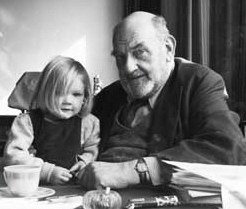
Lieutenant-Commander John James Cawdell Irving, R.N.
22 January 1898 — 23 July 1967
Royal Navy officer, Antarctic explorer, and author of more than a dozen books on naval history, seamanship, and the sea.
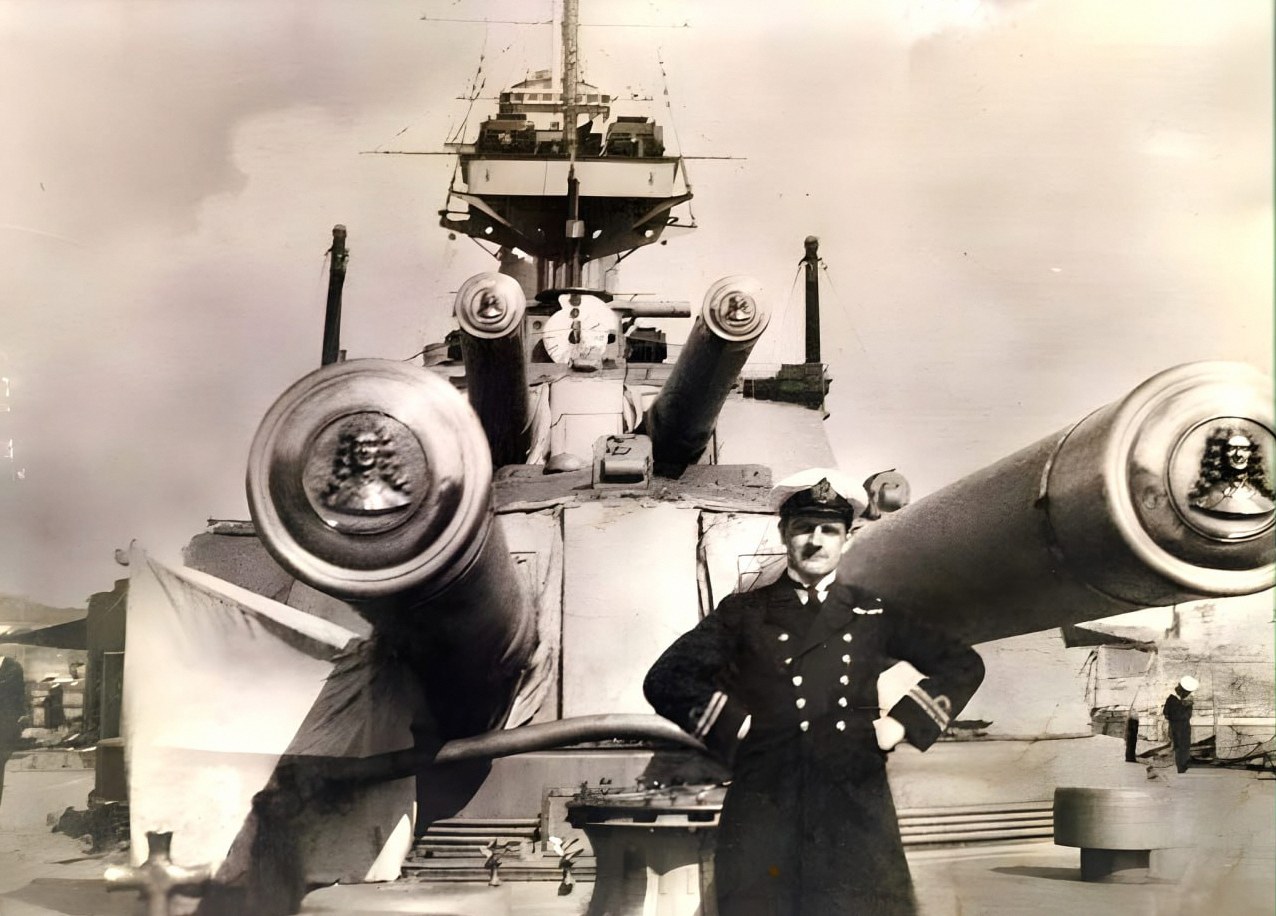
John James Cawdell Irving (known as "Jack") was born on 22 January 1898 in Cowley, Oxford, the son of John Irving and Clara Cawdell. He became a Lieutenant-Commander in the Royal Navy, a prolific maritime author, and an Antarctic explorer. He served in both World Wars — including at the Battle of Jutland in 1916 — commanded research vessels in the Southern Ocean, charted the sunken creeks of England's coasts, and wrote extensively on naval history, traditions, and seamanship.
He was the father of the historian David Irving.
Early Naval Career and the Great War
John Irving received his initial training as a cadet on HMS Worcester, the Thames Nautical Training College ship. He entered the Royal Navy as a Temporary Midshipman in December 1914, at the age of sixteen, and served in the North Sea patrol, the Mediterranean, and the Baltic throughout the First World War.
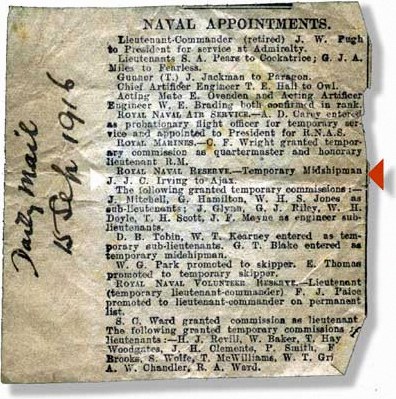
The Daily Mail of 25 September 1916 recorded his appointment: "Royal Naval Reserve. — Temporary midshipman J.J.C. Irving to Ajax." A fellow officer's descendant, Peter Eastman, later corresponded with David Irving about an ancestor who had served alongside Commander Irving at the Battle of Jutland (31 May 1916) — the largest naval battle of the war, involving more than 250 vessels. Irving would later write about this action in The Smoke Screen of Jutland, his defence of Admiral Jellicoe's controversial conduct during the engagement.
Between the Wars: Author and Explorer
After leaving the Navy in 1922, Irving married Beryl Irene Newington — herself a published author and accomplished illustrator — on 18 November 1921 at Rushbrooke, County Cork, Ireland. Beryl's own works included The Dawnchild (Faber & Gwyer, 1926) and Daffy Goes to Sea (Nisbet, 1932), and she contributed illustrations to The Nursery World, Radio Times, and the East Anglian Times. She would go on to illustrate several of her husband's books.
Irving turned to literary work. His first major book, The Coronel and the Falklands (A.M. Philpot, 1927), was an account of two pivotal naval engagements of the First World War — Admiral Cradock's defeat at Coronel and the subsequent destruction of the German squadron at the Falkland Islands. The Oxford Mail described it as "the well known book." It was translated into German as Coronel und Falkland (K.F. Koehler, Leipzig, 1928), demonstrating its international reach.
He also contributed articles on yachting to various periodicals and carried out valuable work charting the sunken creeks of the south and east coasts of England.
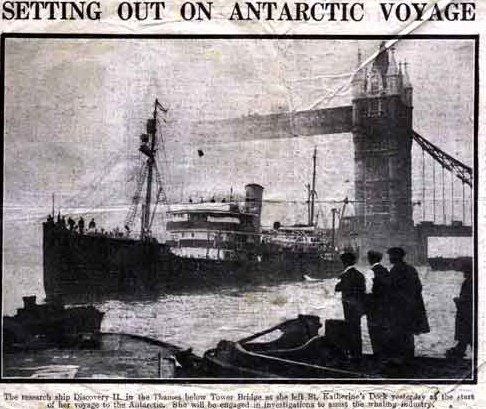
RRS Discovery II — Antarctic, 1929
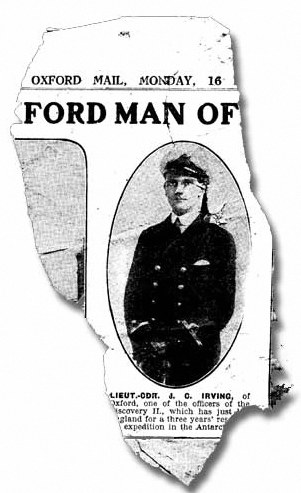
In December 1929, the Oxford Mail reported under the headline "Oxford Man on Discovery II: Big Send-off From London To-day: 3 Years' Cruise":
When the Discovery II sailed from London docks this morning for her three years' cruise of the Antarctic she had on board a representative of Oxford in the person of Lieut.-Commander John C. Irving, R.N. … Since he left the Navy in 1922 he has been engaged in literary work, and is the author of the well known book, The Coronel and the Falklands. He has also contributed articles on yachting to various periodicals. Lieut.-Commander Irving has done valuable work in charting the sunken creeks of the South and East coasts of England.
The newspaper described the scene: "Hundreds of people gathered to witness the departure of the vessel and after two hours' skilful manœuvring she was steered into the Thames, where much larger crowds were watching. As the ship glided from her berth girls crowded to the windows of the factories overlooking the dock and waved good-bye to the crew. One very pretty girl, more daring than the rest, climbed out on to a ledge and shouted 'A Merry Christmas next week,' and the sailors responded with a cheer."
RRS William Scoresby — Antarctic Command
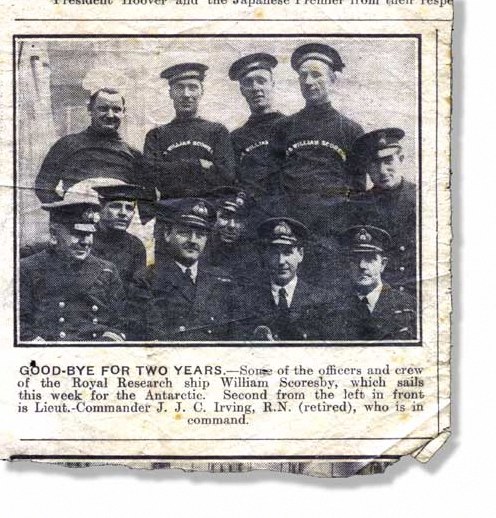
In October 1930, Irving took command of the Royal Research Ship William Scoresby, a vessel specially built for the Discovery Committee for operations in Antarctic waters. Under his command, the ship sailed for the Antarctic on a two-year research cruise, contributing to the Discovery Investigations — a programme of biological, hydrographical, and oceanographic research that included the marking of thousands of whales.
A press photograph from the departure identifies him as "second from the left in front … Lieut.-Commander J.J.C. Irving, R.N. (retired), who is in command."
Second World War — HMS Edinburgh
During the Second World War, Irving returned to active service as an officer aboard HMS Edinburgh, a Town-class light cruiser of 10,550 tons with a crew of 750.
On 30 April 1942, while escorting Convoy QP 11 from Murmansk through the Barents Sea, Edinburgh was torpedoed by German submarine U-456. Two days later, though crippled, the ship fought a running engagement with three German destroyers — Hermann Schoemann, Z24, and Z25. Despite her damage, Edinburgh's guns scored hits on Hermann Schoemann, sinking her. A third torpedo struck Edinburgh amidships, and the order was given to abandon ship. She was scuttled by a torpedo from HMS Foresight.
Two officers and fifty-six ratings were lost. Approximately 840 men were rescued by minesweepers. Edinburgh had been carrying 4.5 tons of Russian gold bullion — part-payment by the Soviet Union for Allied war supplies — valued at some £1.5 million in 1942 (approximately £88 million today). The gold was recovered from the wreck by salvage divers in the 1980s.
Irving survived the sinking.
Books by Commander John Irving
Commander Irving was a prolific author on naval subjects. His works span battle history, naval traditions, seamanship, navigation, and children's fiction:
Naval History
- The Coronel and the Falklands (A.M. Philpot, 1927) — The naval battles of 1914, based on naval records and survivor accounts from both sides. German edition: Coronel und Falkland (K.F. Koehler, Leipzig, 1928).
- The Smoke Screen of Jutland (Kimber, 1966) — A defence of Admiral Jellicoe's conduct at the Battle of Jutland, detailing the engagement of more than 200 vessels.
Naval Life and Traditions
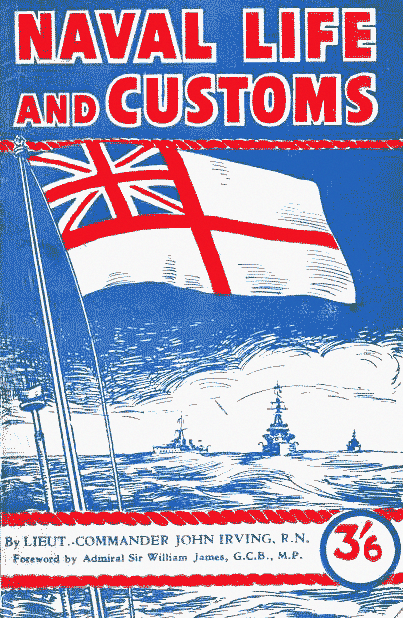
- Naval Life and Customs (Sherratt & Hughes, 1945) — The traditions and daily life of the Royal Navy. Foreword by Admiral Sir William James, G.C.B., M.P.
- Royal Navalese: A Glossary of Fo'c'sle Language (Edward Arnold, 1946) — Naval vocabulary from wardroom to fo'c'sle. Illustrated by Beryl Irving.
- Manual of Flag Etiquette — The authoritative guide, reviewed and accepted by the Lords Commissioners of the Admiralty.
Seamanship and Navigation
- Coastal Navigation and Pilotage
- The Navigation of Small Yachts (Arnold, 1934)
- Knots, Ties and Splices (with J. Tom Burgess)
- The Yachtsman's Week-End Book (with Douglas Service, 1938) — Illustrated by Beryl Irving.
- Rivers of East Anglia — The rivers and coastal waterways of Essex and Suffolk. Illustrated by Beryl Irving.
Other Works
- The King's Britannia (Seeley, Service & Co., 1936) — The history of the royal racing yacht Britannia (1893–1936).
- The Dick Valliant Trilogy (children's fiction) — Naval Cadet, In the Dardanelles, and On Northern Patrol. Adventures of a young naval cadet in the Great War.
📚 Many of these titles are available from Irving Books.
Browse His BooksPersonal Life
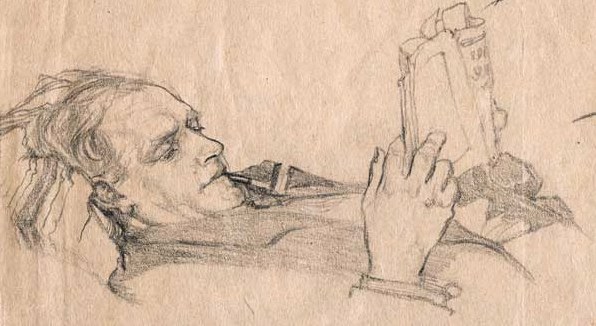
John Irving was born in Cowley, Oxford, the son of John Irving and Clara Cawdell. He married Beryl Irene Newington on 18 November 1921 at Rushbrooke, County Cork, Ireland. Beryl (born 24 October 1896 at St. Leonards-on-Sea, Sussex) was the daughter of Captain Charles Newington, formerly of the Indian Army.
They had four children between 1930 and 1938: their eldest son John, daughter Jennifer Caroline, and twins David and Nicholas. Jennifer worked in publishing, on the staff of Look and Learn magazine. David became a historian and author.
Commander John James Cawdell Irving died on 23 July 1967 in Bangor, Caernarfonshire, Wales.