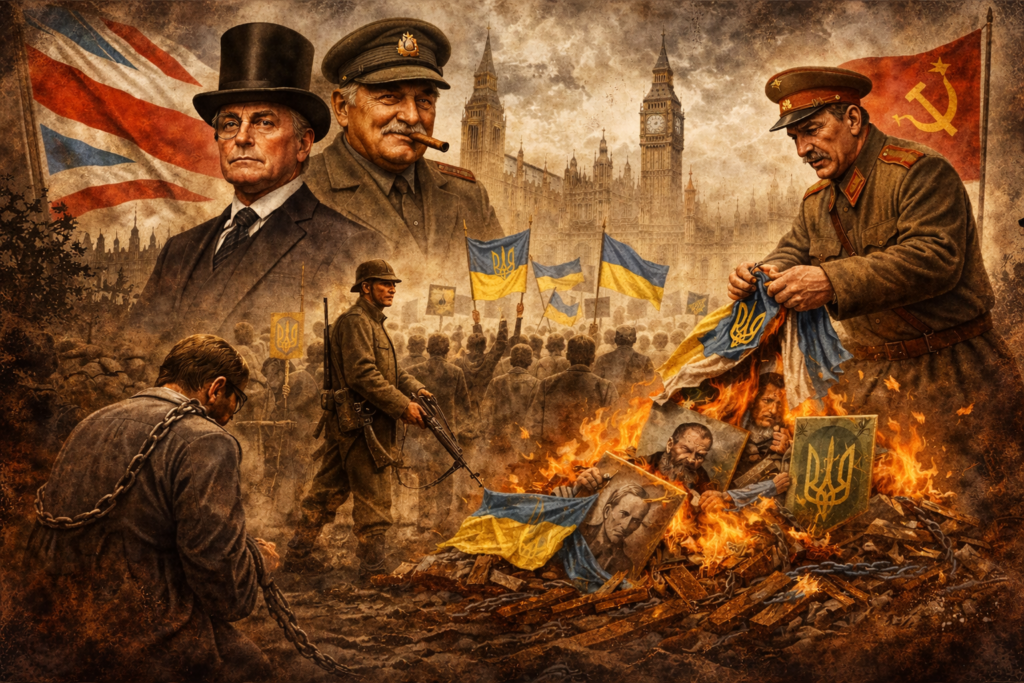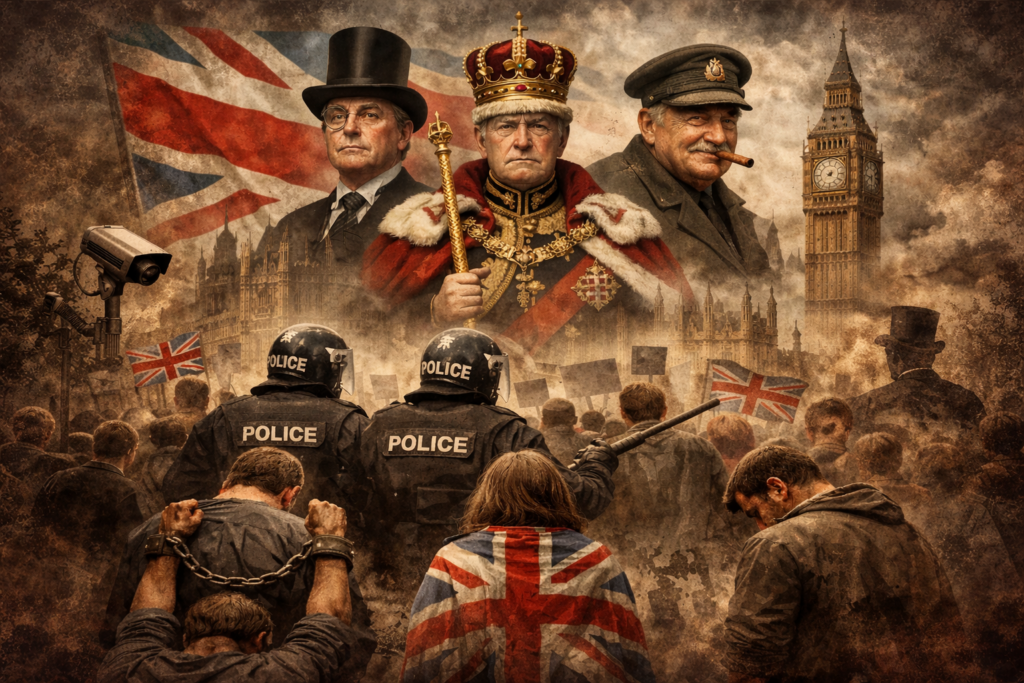
Contrary to what some people think, tyranny comes in many shapes and forms. There is overt tyranny, such as Saudi Arabia and North Korea, where no pretence is made to conceal its tyrannical nature, where there is zero free speech, and where imprisonment, or sometimes execution, awaits anybody who dares to express an opinion which is at odds with the ideology of the country’s ruling elite.
Then there is clever tyranny, where outwardly a country possesses all of the facets of democracy and freedom but, in reality, operates against the interests of its own people. This form of rule is the most dangerous because its methods are insidious and devious, fooling many a person both inside and outside the country, thereby securing greater longevity for a regime. In essence, clever tyranny masquerades as democracy.
Before proceeding further, it is imperative that readers truly understand what tyranny is.
John Milton, the great English poet and intellectual who lived between 1608 and 1674, stated in his pamphlet The Tenure of Kings and Magistrates that a king must rule in the interests of his people, from whom his power stems. Accordingly, if a king does not rule in the interests of his people, then the king is a tyrant and his kingdom a tyranny. Milton wrote: “It being thus manifest, that the power of kings and magistrates is nothing else but what is only derivative, transferred, and committed to them in trust from the people to the common good of them all.”¹
Now that tyranny has been clearly defined, attention can be turned to what is the cleverest example of such rule in the world today: the British ruling elite.
⸻
Britain’s governing order
At the heart of the British ruling elite sits the monarch, followed by the aristocracy, banking and financial elites, media barons, senior military and intelligence figures, and other unelected forces. Constitutional monarchy functions as a façade, designed to project the idea at home and abroad that Britain is a parliamentary democracy when, in practice, power circulates within a narrow and insulated establishment.
No leader in history has ever voluntarily and genuinely surrendered power. It would be extraordinary to believe Britain is an exception. The symbolism alone is revealing. The national anthem is not a song for Britain or the British people, but for the monarch. When a member of the royal family dies, the Royal Standard, not the Union Flag, is placed upon the coffin. Such details are not accidental; they reflect where loyalty and authority ultimately reside.
Applying Milton’s definition, it becomes clear that Britain operates in a manner inconsistent with the interests of its people. King Charles III, like his mother Elizabeth II before him, presides over a governing order that advances priorities for the elite rather than the welfare of the English, Scottish, Welsh, and Northern Irish nations, who comprise the British people.
⸻
The undemocratic structure of the elites’ hold on power
The British establishment is not merely political but social, financial, and cultural. Senior figures in banking and finance are not external observers of this system but integral to it. Members of the Rothschild family, for example, have for decades occupied formal advisory and ceremonial roles within Britain’s governing order.
Sir Evelyn de Rothschild served for many years as a financial adviser to Queen Elizabeth II, a relationship openly acknowledged in the British press and royal biographies.² Jacob Rothschild, 4th Baron Rothschild, maintained a long-standing professional relationship with Charles III during his time as Prince of Wales, including involvement with financial and advisory bodies connected to the Duchy of Cornwall, and was publicly honoured by the Crown.³ Members of the Royal Family, including Charles III and Queen Camilla, attended Lord Rothschild’s memorial service at Waddesdon Manor in June 2024, a public and widely reported event.⁴
Such proximity does not require conspiracy to be consequential. It reflects an elite culture in which power circulates within a small, self-reinforcing network, largely beyond democratic reach.
⸻
Demographic and economic consequences
It is not in the interests of the British people for Britain to have been flooded with immigrants. Net migration reached approximately 906,000 in the year ending June 2023, the highest figure on record.⁵ Further, population growth in recent decades has been overwhelmingly driven by immigration rather than natural increase.
It is not in the interests of the British people for demographic change to occur. While Britain’s overall population continues to grow, the British population has declined sharply as a proportion of the total, falling from 87 percent in 2001 to around 74 percent by 2021.⁶ This reflects sustained high migration, low native birth rates, and the net emigration of British citizens themselves.⁷
And it is not in the interests of the British people for British culture to be eroded and for multiculturalism to be imposed, nor for Christianity, the country’s historic religion, to be marginalised in public life.
⸻
Immigration, welfare, and public services
It is not in the interests of the British people for illegal immigrants and other foreign nationals to receive billions of pounds per year in state support while many Britons struggle to heat their homes or escape poverty. Official figures show asylum-related expenditure of approximately £4.7 billion in 2023–24, including over £3 billion spent on accommodation alone.⁸
It is not in the interests of the British people for access to public services to be detached from citizenship. NHS England confirms that healthcare is provided on the basis of residence rather than nationality, placing additional strain on a system already buckling under record waiting lists.⁹
⸻
Borders, speech, and selective legitimacy
It is not in the interests of the British people for Britain’s borders to remain effectively undefended, nor for dissent to be increasingly policed. Britain has witnessed an expanding regime of speech regulation, including policing of online expression and public-order offences. In 2024, the UK Supreme Court ruled aspects of non-crime hate-incident recording unlawful due to their chilling effect on free speech.¹⁰
It is also worth recalling that the British state has not always applied its moral language consistently when violence has been directed against its own forces. During the final years of the British Mandate in Palestine, armed underground organisations carried out a sustained campaign of attacks against British soldiers, police officers, and civilian officials. Between 1944 and 1948, several hundred British servicemen and personnel were killed.¹¹ Incidents such as the bombing of the King David Hotel in 1946 and the murder of two British sergeants in July 1947 shocked the British public and played a decisive role in hastening Britain’s withdrawal from the territory.¹² Yet figures associated with those campaigns were later absorbed into respectable political life in Israel, their actions reframed as part of a national struggle rather than treated as permanently disqualifying crimes. History suggests that the boundary between “terrorism” and legitimacy is often drawn not by principle, but by power and outcome.
⸻
Climate intervention and consent
It is not in the interests of the British people for weather and climate intervention to be explored. While the government insists it is not deploying solar radiation management, Britain is now a major funder of geoengineering research.
The Advanced Research and Invention Agency launched its Actively Cooling the Earth programme in 2024, explicitly exploring techniques such as stratospheric aerosol injection and marine cloud brightening, including modelling and potential small-scale outdoor experiments.¹³ The Royal Society has repeatedly acknowledged both the theoretical feasibility and the profound risks of such interventions.¹⁴
⸻
Public dissent and elite legitimacy
The argument that Britain is governed in ways increasingly detached from popular consent is no longer confined to academic or fringe circles. It is voiced openly by senior legal figures, journalists, and former parliamentarians. The following statements are included as illustrations of contemporary dissent and public sentiment, not as evidentiary proof:
Former Supreme Court justice Lord Jonathan Sumption has warned:
“We are in danger of becoming a society that is governed by coercion and fear rather than consent.”
Journalist and author Peter Hitchens has observed:
“We still have the outward appearance of democracy, but much of the real decision-making has been quietly removed from public control.”
Former Member of Parliament Andrew Bridgen has stated, in relation to geoengineering research:
“Geoengineering, sun dimming, cloud seeding and weather manipulation in the UK must stop. It’s a crime against humanity.”
Author and commentator Douglas Murray, while supportive of immigration in principle, has acknowledged:
“The public were never asked whether they wanted this level of immigration, and they were never given the option to stop it.”
Whether one agrees with these individuals or not, the scale and prominence of such views reflect a widening realisation that Britain’s governing order does not operate with the consent of the British people.
⸻
Conclusion
All that King Charles III and the wider British ruling elite have conceived, and which has been implemented by their political, bureaucratic, and media functionaries, otherwise known as useful idiots such as Keir Starmer, does not serve the interests of the British people. It serves, instead, the preservation and expansion of elite power, pursued through an agenda which does not serve the interests of the British people.
For many years this system functioned as a clever tyranny. Dissent was not crushed outright but neutralised through financial pressure, reputational ruin, and narrative control. That phase may now be ending.
History shows that when such systems lose confidence in their own illusions, they tend to become cruder and more brittle. For now, however, the British ruling elite retains its distinction as the cleverest of all tyrannies in the world.